What advanced primary care is, and why it matters to employers
For employers, advanced primary care offers an opportunity to improve employee health, support more effective healthcare decisions, and address underlying drivers of healthcare spending.
Smaller patient panels and longer appointments give physicians more time to understand patients' medical histories, health risks, and individual needs.These ongoing relationships can help physicians identify changes in health earlier and make more informed care decisions.
Rather than waiting for patients to seek care when something goes wrong, advanced primary care emphasizes prevention, outreach, chronic condition management, and support between appointments.The goal is to identify and address health needs before they become more complex or costly.
Advanced primary care places greater emphasis on coordinating those decisions and helping patients access appropriate, high-quality care.
These arrangements can give physicians greater flexibility to focus on prevention, ongoing care, and improved health outcomes rather than simply increasing visit volume.
At Aligned Marketplace, we define advanced primary care as a more comprehensive approach to primary care that emphasizes timely access, stronger doctor-patient relationships, preventive care, chronic condition management, behavioral health integration, and coordinated care, supported by payment models that tie a significant portion of compensation to value rather than the volume of services delivered.
Direct primary care (DPC) is one practice and payment model that can support advanced primary care. Under DPC, patients or employers pay a recurring membership fee that typically covers most primary care services without additional charges for individual visits.
Why does advanced primary care matter to employer healthcare costs?
- Earlier intervention and chronic condition management - Proactive engagement and preventive care help identify health risks, close care gaps, and manage chronic conditions before complications develop.
- More appropriate use of healthcare services - When physicians can address more needs directly, patients may avoid unnecessary specialist visits, diagnostic testing, and emergency care.
- Better decisions about downstream care - When additional care is needed, primary care physicians can help direct patients toward high-quality, cost-effective specialists and facilities, rather than defaulting to higher-cost settings.
What should employers look for in an advanced primary care model?
1. Timely access
2. Continuity with a doctor or care team
3. Ability to reach people early
4. Aligned financial incentives
5. Independent care decisions
6. High-quality and comprehensive care
How does advanced primary care fit into existing employer benefits?
Advanced primary care can complement those investments by strengthening ongoing care and extending access to employees and families who may not be reached by existing programs.
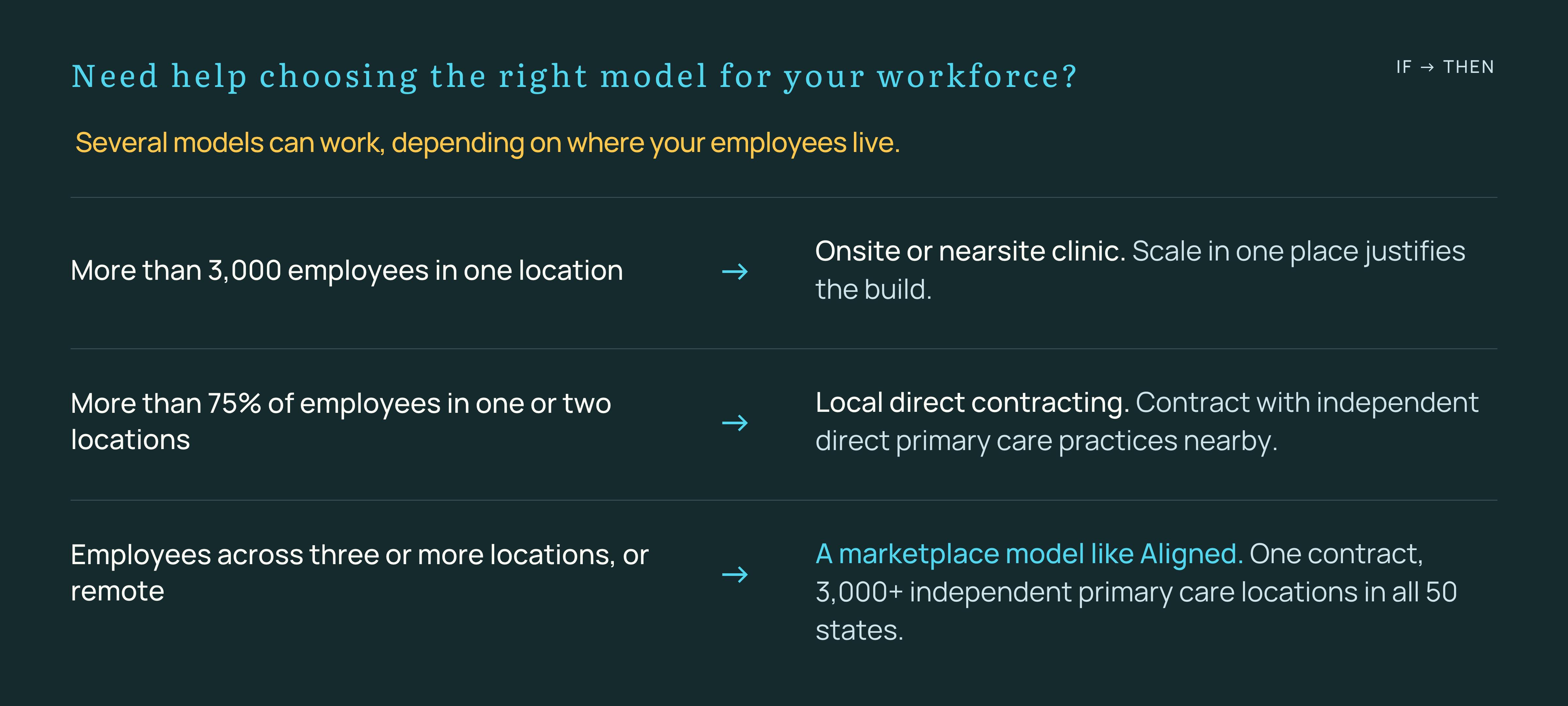
For employers with distributed workforces, this is particularly important. Employees in smaller offices, field locations, retail environments, or remote settings may have limited access to employer-sponsored clinics.
- Which employee populations and locations do existing clinics serve?
- Where do employees and family members lack convenient access?
- Can local practices help fill those geographic gaps?